
Most marketing managers assume polished production signals quality, and quality converts. That assumption is costing you money. 60% of consumers consider user-generated content the most genuine form of advertising, while 70% of Gen Z say UGC actively helps them make purchase decisions. Using UGC in ad creatives is no longer a scrappy workaround for brands with small budgets. It is the strategy that performance teams at serious e-commerce brands are building their entire creative pipelines around.
Table of Contents
- Key Takeaways
- What UGC in ad creatives actually is and why it outperforms
- UGC ad creative formats and how to deploy them
- Scaling UGC production with AI tools
- Best practices for testing UGC ad creatives
- Integrating UGC into your broader e-commerce marketing strategy
- My honest take on where UGC strategy breaks down
- How Creaboost helps you run UGC at real scale
- FAQ
Key Takeaways
| Point | Details |
|---|---|
| UGC outperforms polished ads | Authentic, native-feeling content drives higher engagement and conversion than studio-produced creative. |
| Format alignment drives results | Match your UGC format (testimonial, unboxing, before/after) to the correct funnel stage for meaningful lift. |
| AI scales production dramatically | AI-generated UGC can drop per-video costs to under $5 and enable testing volumes impossible with human creators. |
| The hook is everything | The first 1 to 3 seconds determine whether your creative gets distributed. Test hooks first, everything else second. |
| Analytics close the loop | Without systematic tagging and performance tracking, you cannot identify winners fast enough to scale them profitably. |
What UGC in ad creatives actually is and why it outperforms
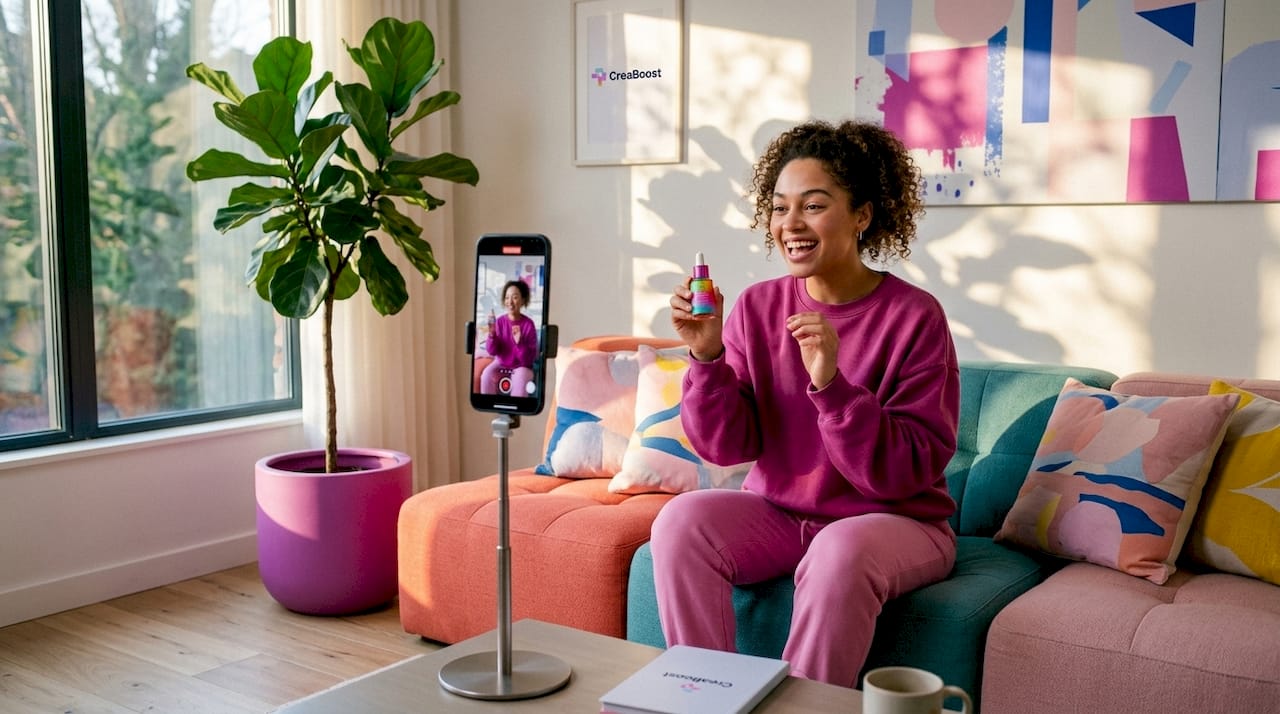
UGC in ad creatives refers to any ad content that either originates from a real customer or is styled to look and feel like it did. That includes screen-recorded testimonials, handheld product demos, unboxing videos, and creator-style talking-head content. The defining characteristic is not who made it. It is whether it feels native to the feed the viewer is scrolling through.
That nativeness is the performance driver. A glossy studio ad with orchestrated lighting and branded lower-thirds signals "advertisement" before a single word is spoken. UGC does the opposite. It blends into the organic content surrounding it, which means viewers engage with it before their defenses go up. UGC-style ads achieve 4x higher click-through rates on Meta compared to traditionally produced creative. That gap is not subtle.
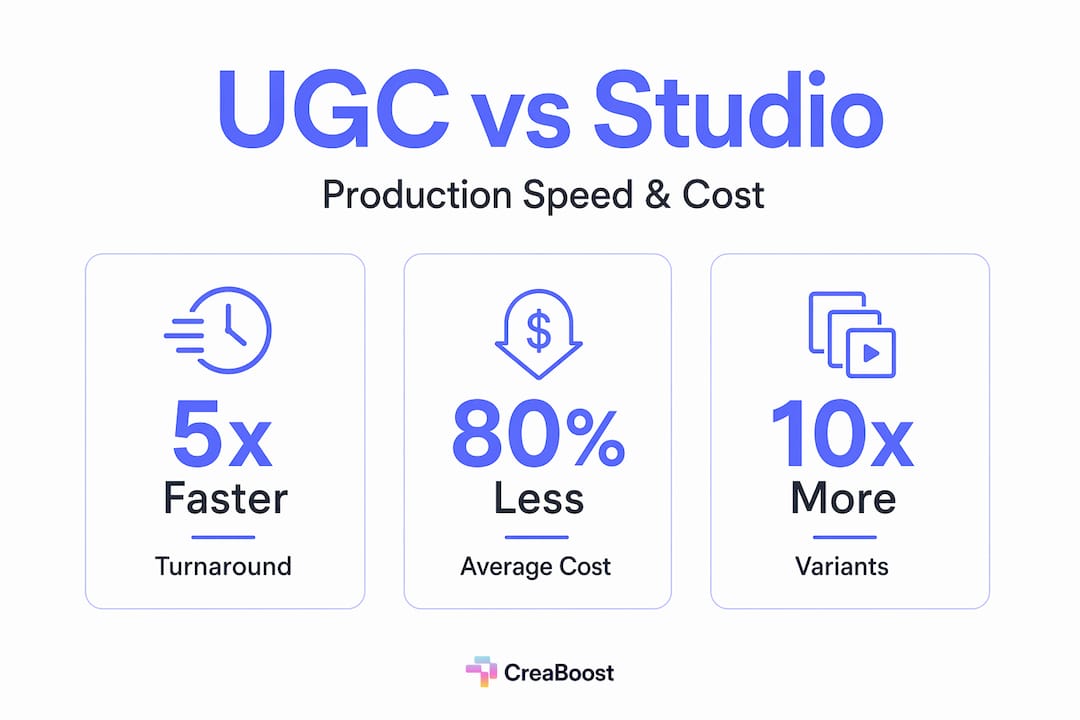
There is also a practical cost argument. Consider the comparison:
| Creative Type | Average Cost Per Video | Turnaround Time | Iteration Speed |
|---|---|---|---|
| Studio-produced ad | $2,000 and up | 2 to 4 weeks | Slow, expensive to revise |
| Human UGC creator | $100 to $300 | 3 to 7 days | Moderate |
| AI-generated UGC | Under $5 | Minutes | Immediate |
Lower costs and faster cycles mean you can test more concepts, kill losers earlier, and scale winners faster. That is exactly where user-generated content advertising creates a structural competitive advantage for e-commerce teams running at scale.
The trust dimension matters too. Audiences have learned to filter out brand-controlled messaging. When a real person (or a convincingly real persona) holds your product and describes a genuine outcome they experienced, viewers weigh that differently than they weigh a branded tagline. That is the core of UGC content marketing: credibility borrowed from authenticity, not manufactured by a creative director.
UGC ad creative formats and how to deploy them
Not all UGC formats perform the same job. UGC ads span several formats including testimonials, unboxings, before/after transformations, day-in-the-life walkthroughs, and founder point-of-view videos. Using the wrong format at the wrong funnel stage is one of the most common reasons UGC tests fail before they ever get a fair reading.
Here is how each format maps to intent:
- Testimonials are conversion-stage workhorses. They address objections head-on with real social proof. A customer saying "I was skeptical, but after two weeks..." does more at the bottom of the funnel than any benefit-led headline.
- Unboxings serve awareness and consideration. They build excitement and visualize the delivery experience, which matters enormously for gift products, premium packaging, and subscription boxes.
- Before/after videos work best in consideration and conversion contexts. They make outcomes tangible. For health, beauty, fitness, and home categories, the transformation is the message.
- Day-in-the-life content is top-of-funnel and brand-building. It integrates the product into a desirable lifestyle rather than selling it directly. This format works well for retention audiences and lookalikes.
- Founder POV videos build trust and differentiation. A founder explaining why they built the product from scratch, with no teleprompter polish, signals authenticity at a level few formats can match.
The scripting discipline (or lack of it) separates strong UGC from weak UGC. Over-scripted content reads as corporate, and audiences detect it immediately. The sweet spot is a structured brief that defines the problem, the product moment, the key outcome, and the call to action, while leaving the creator's natural voice intact. When you work with UGC influencers in advertising, give them your core message, not your approved copy.
Pro Tip: Test your hooks with deliberately rough delivery rather than polished reads. A creator stumbling slightly over a genuine observation feels more credible than a perfectly rehearsed line, and it performs accordingly.
Scaling UGC production with AI tools
The traditional bottleneck in UGC production is human availability. You need a creator who fits your demographic, understands your product, shoots clean-enough footage, delivers on brief, accepts revisions, and gets content back to you inside your media cycle. That is a lot of dependencies, and they all add days to your timeline.
AI-generated UGC removes most of them. Modern platforms now generate natural facial micro-expressions and mouth movements synchronized to audio. Earlier versions of this technology were easy to spot. Current ones are not, especially in the fast-scroll context where your ads actually get viewed.
Here is a practical workflow for generating AI UGC at scale:
- Define your avatar profiles. Select 3 to 5 demographic profiles that match your customer base (age, apparent lifestyle, gender). Most AI platforms let you choose these from a library or customize them.
- Write multiple hook variants. Produce at least 5 different opening lines for the same core message. Test curiosity hooks, pain-point hooks, bold claim hooks, and narrative hooks simultaneously.
- Generate the body content. Use a single script variation for the product intro, demo, and social proof sections. Only the hook changes across variants. This isolates the hook variable cleanly.
- Apply captions. 85% of social video is watched on mute. If your AI-generated UGC does not have styled captions baked in, you are giving away a significant portion of your audience.
- Launch simultaneously. Run all variants in the same campaign structure under controlled budget splits, then let performance data tell you which hook to scale.
This workflow shifts production from being calendar-limited to test-budget-limited. Testing 5 to 10 times more creative concepts using AI UGC platforms consistently produces higher ROAS because you simply find winners faster.
That said, AI has real limits. For products where tactile sensory experience matters (skincare texture, fabric feel, food aroma), human creators still deliver more believable testimonials. For categories where the transformation story requires genuine emotional weight, a real person's face carries more than a synthetic one. The practical answer is not to choose one or the other. Build your testing volume with AI, and use human creators for your proven winning concepts that deserve premium production.
Pro Tip: AI platforms that support product compositing, where the AI avatar visibly holds or interacts with your product image, generate meaningfully higher trust signals than talking-head formats alone. Prioritize this capability when evaluating tools.
Best practices for testing UGC ad creatives
The biggest mistake e-commerce marketing teams make with UGC is treating it as a content project instead of a testing system. Content projects have deadlines and deliverables. Testing systems have hypotheses and data. The mindset shift changes everything about how you structure your creative pipeline.
The first 1 to 3 seconds of any UGC ad are not just important. They are determinative. If your hook fails, changing the script midway through, swapping the CTA, or improving the product demo will not save the creative. The algorithm has already made its distribution decision based on early engagement signals. Test hooks first, obsessively, before investing in any other variable.
Here is what a tight UGC testing practice looks like in practice:
- Run at least 5 creative variants per concept. One winner per test tells you almost nothing. Multiple variants per concept tells you which element within the concept is actually driving performance.
- Measure hook rate and hold rate before CTR. Hook rate (the percentage of viewers who watch past the first 3 seconds) tells you if your opening works. Hold rate tells you if your middle holds attention. CTR and CPA tell you if the full creative converts. Fix upstream metrics before optimizing downstream ones.
- Separate Meta and TikTok testing. Pacing, editing rhythm, and copy length that performs on TikTok often translates poorly to Meta Reels, and vice versa. Platform-specific formatting is not optional when you are optimizing for real ROAS performance.
- Kill losers fast, scale winners with conviction. Most teams wait too long on underperformers. Set clear kill thresholds before you launch, and honor them. Budget recaptured from losers funds better tests.
- Rotate before you fatigue. Creative fatigue shows up in your frequency and engagement metrics before it shows up in CPA. By the time CPA moves, you have already spent real money on a burned-out creative.
Pro Tip: Track creative performance metrics at the concept level, not just the ad level. An ad can fail because of a bad hook even if the underlying concept is strong. Separating concept performance from execution performance gives you much better direction for the next creative cycle.
Integrating UGC into your broader e-commerce marketing strategy
Running great UGC tests in paid social is only part of the equation. The brands getting the most from user-generated content advertising are the ones connecting their paid UGC pipeline to every other channel their customer touches.
Cross-channel amplification is where UGC compounds. A testimonial that performs in paid Meta ads often works equally well in email, on product pages, and in organic social. Paid performance data gives you confidence before you invest in additional distribution. You already know the hook works. Now use it everywhere.
A few integration principles worth building into your workflow:
- Align UGC angles with your brand narrative. Every creator brief should reflect the same core brand positioning. Individual creators can use their own voice, but the problem they are solving and the outcome they describe should map back to your brand story consistently.
- Apply FTC disclosure standards without exception. Any paid creator, including UGC influencers in advertising who receive free product or payment, must disclose the relationship. "Gifted by" or "Paid partnership" is not optional. Getting this wrong is not a minor compliance issue.
- Build attribution before you scale. Know which UTMs, naming conventions, and pixel events you are using to track creative performance back to revenue before you scale spend. Scaling without attribution produces great-looking CPMs and murky ROAS.
- Schedule regular creative audits. Winning creatives age. Set a calendar cadence, monthly or quarterly depending on your spend, to review which concepts are still generating returns versus which have flattened. Fresh iterations of proven hooks extend asset life without starting from scratch.
- Feed performance data back into your creative briefs. The best ugc examples from your own account are the most powerful briefing tool you have. Your next brief should start with what your data already told you worked.
My honest take on where UGC strategy breaks down
I've watched a lot of performance teams adopt UGC with genuine enthusiasm and then get frustrated six months later because results plateaued. Every time, the root cause is the same. They treated UGC as a content category instead of a testing discipline.
The UGC playbook has matured to the point where lazy execution no longer gets results. Audiences have seen the handheld testimonial format hundreds of times. They are not fooled by faux-authenticity, and they are not moved by a generic unboxing with no narrative tension. What still works is genuine specificity. A real outcome described in a real person's words, delivered with the rhythm of an actual human speaking to a friend.
My take on AI-generated UGC is more pragmatic than the debates I often hear. The people who dismiss it entirely are leaving testing volume on the table. The people who use only AI are missing the emotional resonance that real creators can still deliver on the right product. The smartest teams I have seen use AI to generate volume and identify winning hooks, then bring human creators in for the top 20% of proven concepts that deserve the investment.
The one area I am most insistent about: test your hooks with more demographic diversity than feels comfortable. The avatar that converts your existing customer base is not always the avatar that opens up a new segment. I have seen DTC brands unlock entirely new audiences simply by testing the same proven script with a different creator profile. The concept was already validated. The distribution just needed a different face.
If you are not running hook variants across at least three demographic profiles simultaneously, you are not actually testing. You are guessing.
— Bythewise
How Creaboost helps you run UGC at real scale
If any of the testing discipline described above sounds like the system you have been trying to build internally, Creaboost is worth a serious look.
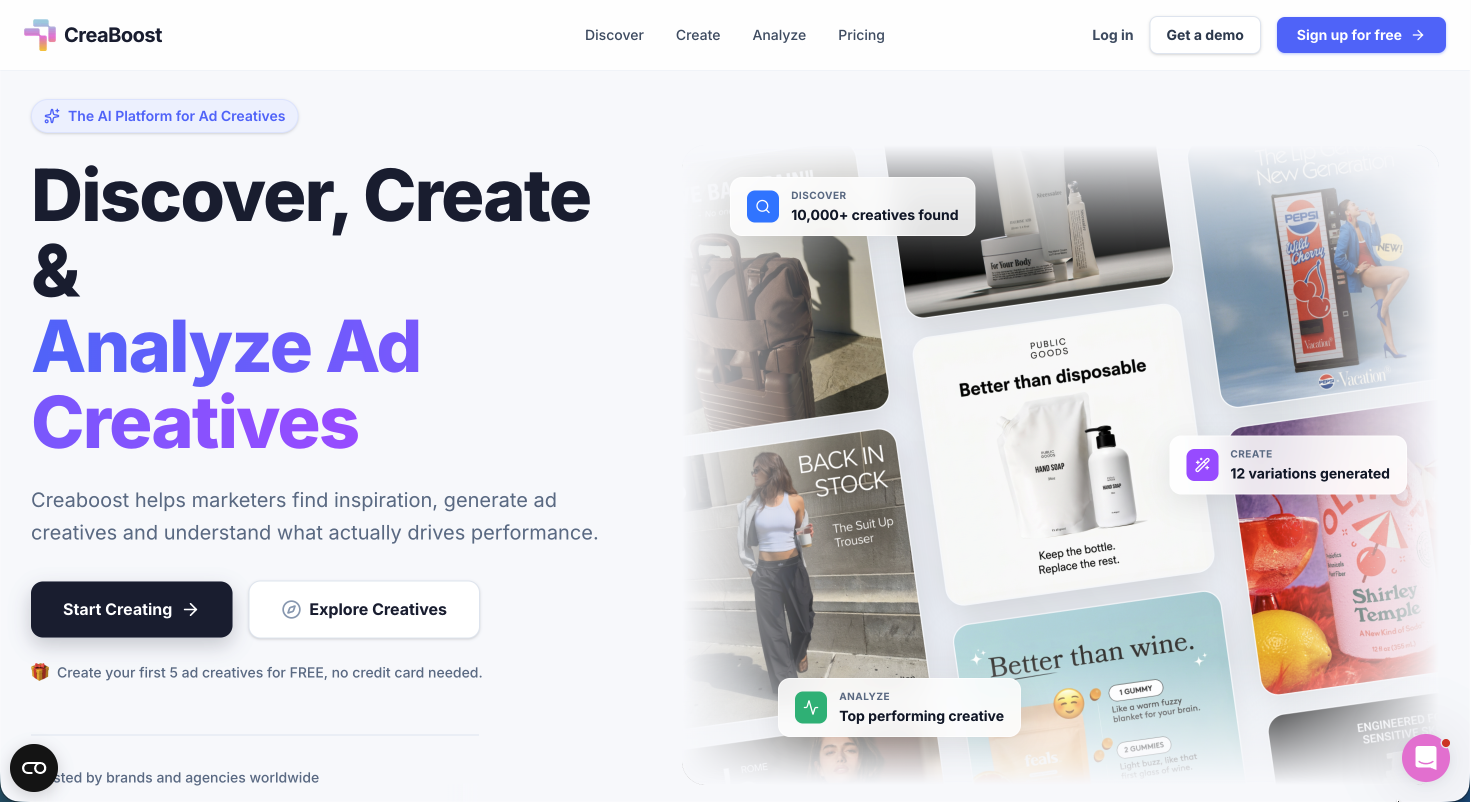
Creaboost's Create feature turns a product URL into platform-ready ad variations in minutes, not days, covering every Meta and TikTok format your campaigns need. Need five hook variants on the same offer, batch-resized and on-brand? It is a few clicks. On the analytics side, Creaboost's Analyze feature auto-tags every creative by hook, format, concept, and angle, the kind of tagging discipline most teams abandon within a quarter. You see which concepts are actually driving ROAS, catch fatigue before it hits your CPA, and scale winners with confidence instead of assumption. The teams using Creaboost do not have bigger budgets. They have a tighter loop.
FAQ
What is UGC in ad creatives?
UGC in ad creatives refers to advertising content that is either created by real customers or styled to mimic authentic, user-created content. It performs well because it feels native to social feeds and avoids the "ad" signals that cause audiences to disengage.
Why does UGC outperform traditional polished ads?
UGC-style ads blend into organic feed content, reducing viewer defenses and increasing engagement. Research shows they achieve 4x higher click-through rates on Meta compared to studio-produced creative.
How do I create UGC ads without a large creator budget?
AI-generated UGC platforms produce creator-style video content for under $5 per video with near-instant turnaround, compared to the $100 to $300 and 3 to 7 day lead times typical of marketplace creators. This makes high-volume testing feasible at almost any budget level.
What metrics should I track for UGC ad performance?
Start with hook rate (viewers past 3 seconds) and hold rate (viewers through the middle) before optimizing for CTR and CPA. Fixing upstream engagement metrics produces more reliable downstream conversion improvements than skipping straight to cost-per-acquisition analysis.
How many UGC creative variants should I test at once?
Run at least 5 variants per concept, isolating hook differences across the same body content. Testing 5 to 10 times more creative concepts consistently drives higher ROAS by identifying winners faster and killing underperformers before they drain budget.